
중앙 정맥 카테터 키트는 다양한 구성 요소의 시너지를 통해 어떻게 의학적 목적을 달성합니까?
키트의 핵심 구성 요소 분석
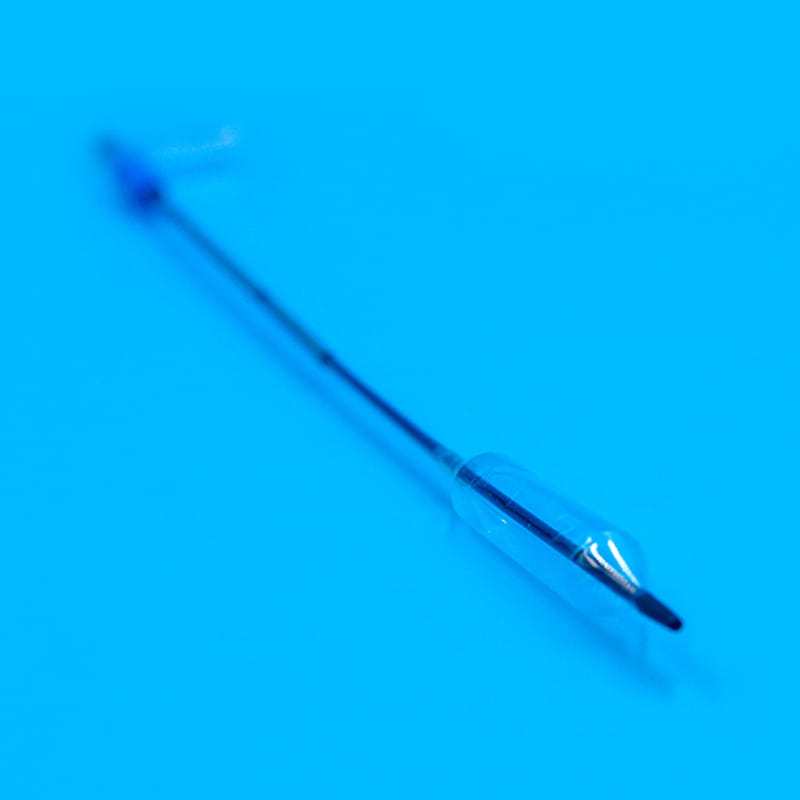
그만큼 중앙 정맥 카테터 키트 다양한 주요 구성 요소가 포함되어 있으며, 각 주요 구성 요소는 각각의 의료 운영 과정에서 독특하고 대체 할 수없는 역할을합니다. 첫 번째는 키트의 핵심 구성 요소 인 중앙 정맥 카테터이며 신체 외부와 신체 내부의 중앙 정맥을 연결하는 채널입니다. 그 재료는 일반적으로 의료 등급의 폴리 우레탄 또는 실리콘으로 만들어집니다. 이러한 물질은 생체 적합성이 우수하며 신체의 이물질 거부를 효과적으로 줄이고 감염과 같은 합병증의 위험을 줄일 수 있습니다. 다양한 유형의 중앙 정맥 카테터는 구조와 기능에 고유 한 특성을 가지고 있습니다. 단일 루멘 카테터는 단일 치료 요구에 적합한 반면, 이중 루멘 또는 다중 루멘 카테터는 주입, 혈액 수집 및 의약품 관리와 같은 다양한 의료 작업을 수행 할 수있어 의료 작업의 효율성과 편의성을 크게 향상시킵니다. 설계 측면에서, 일부 카테터 표면은 항혈계 특성을 더욱 향상시키기 위해 특수 코팅으로 처리됩니다. 일부는 또한 의료진이 삽입 깊이를 정확하게 파악할 수 있도록 척도로 표시되어 있습니다.
그만큼 cannula plays a pioneering role in the central venous catheter kit. When performing a central venous catheter insertion operation, the cannula is first used for percutaneous puncture into the vein. Its needle tip adopts a bevel cutting process. This design is sharp and precise, and can quickly and accurately penetrate the skin and vein wall with minimal resistance, opening a channel for the entry of subsequent components. The needle core and outer sleeve of the cannula needle are closely matched. When the cannula needle successfully enters the vein, the inner needle core is removed through a special separation mechanism, and the outer sleeve with a certain hardness and flexibility will remain in the vein as a guide channel for subsequent guide wires and other components to enter. To ensure the accuracy of puncture, some cannula needles are also equipped with ultrasound guidance adapters, which can be used with ultrasound equipment to observe the puncture path and blood vessel status in real time.
그만큼 guidewire is a key tool for precise positioning and guidance in the central venous catheter kit. After the cannula needle establishes the initial channel, the guidewire will be sent into the vein through the cannula. The outer layer of the guidewire is usually woven from medical-grade stainless steel wire, and the inner layer is a nickel-titanium alloy core. This structure gives the guidewire good flexibility and maneuverability. Doctors can use the J-shaped or straight head design of the guidewire tip to flexibly turn and guide it in the blood vessel through in vitro operation, and accurately send it to the target position. Some high-end guidewires also have a hydrophilic coating, which becomes lubricated after contact with blood, further reducing friction damage to the inner wall of the blood vessel. The existence of the guidewire makes the insertion path of the central venous catheter clearer and more controllable, laying a solid foundation for the smooth insertion of the subsequent catheter.
그만큼 role of the dilator in the central venous catheter kit should not be ignored. Since the diameter of the vein is relatively thin, and the central venous catheter needs to be smoothly inserted, it is necessary to properly dilate the vein. The dilator usually adopts a conical or cylindrical design, and the material is mostly medical-grade polyethylene. It can enter the vein along the guidewire and expand the channel of the venous puncture site by gradually expanding. During the expansion process, the smooth surface treatment and gradual caliber design of the dilator can reduce damage to the venous tissue while ensuring effective expansion. For special patients, such as those with thin blood vessel walls or sclerosis, there are also special controllable dilators available, and doctors can accurately adjust the expansion strength and range according to actual conditions.
그만큼 peelable sheath is an important part of the central venous catheter kit to ensure the safe insertion of the catheter. After the dilator completes the dilation of the vein, the peelable sheath will be sent into the vein along the guidewire and dilator. The peelable sheath consists of two symmetrical half sheaths connected by a special locking structure in the middle. When the peelable sheath reaches the appropriate position, the central venous catheter will be inserted into the vein through the sheath. At this time, the medical staff will separate the peelable sheath from the middle lock and remove it from the body through a specific operation technique, while the central venous catheter will be left in the vein. This unique design not only ensures the smooth catheter insertion process, but also avoids unnecessary damage to the vein and catheter. To prevent accidental scratches on the surrounding tissue when the sheath is peeled off, the edge of the sheath is specially rounded and blunted.
그만큼 fixing device plays a role in stabilizing and fixing the catheter in the central venous catheter kit. In order to ensure that the central venous catheter can maintain a stable position in the patient's body for a long time without displacement or falling off, fixing devices such as sutures, sterile dressings or special catheter fixers will be used to fix the catheter to the patient's skin. The suture fixation method is suitable for patients with long-term catheterization. The catheter is fixed to the skin tissue through delicate suturing operations; the sterile dressing is breathable, waterproof and antibacterial, and can effectively protect the puncture site; the dedicated catheter fixator is made of medical-grade silicone or polymer materials, and can be personalized according to the patient's skin morphology and catheter model through an adjustable buckle design. Appropriate fixation can not only ensure the normal function of the catheter, but also reduce the discomfort and potential risks caused to the patient by the movement of the catheter.
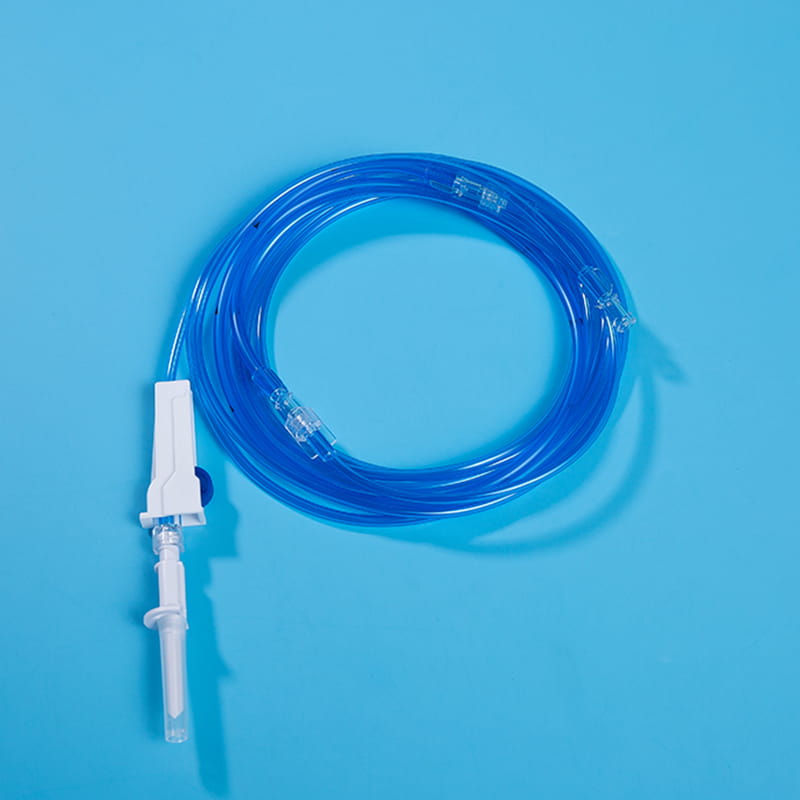
그만큼 interface for external connection is the bridge between the central venous catheter and external medical equipment. Through these interfaces, the central venous catheter can be connected to infusion sets, syringes and other equipment to achieve various medical operations such as infusion, drug administration, and blood collection. The design of these interfaces has good sealing and compatibility, and common ones include Luer connectors and needleless infusion connectors. The Luer connector is connected by threads to ensure a tight connection without leakage; the needleless infusion connector adopts a diaphragm design, which can complete the infusion operation without acupuncture, reducing the risk of infection. At the same time, some interfaces also have anti-backflow function to prevent blood from reflux and blocking the catheter, and support multiple devices to be connected at the same time to meet complex clinical needs.
광범위한 임상 적용 시나리오
실제 의료 응용 분야에서 중앙 정맥 카테터 키트의 사용 시나리오는 매우 넓습니다. 집중 치료 분야에서 많은 양의 주입 및 빈번한 약물이 필요한 중요한 상태가있는 환자의 경우 중앙 정맥 카테터는 체액 및 약물에 대한 환자의 요구를 충족시키기 위해 빠르고 안정적인 주입 채널을 제공 할 수 있습니다. 구조 과정에서 패혈증 충격 환자를 예를 들어, 많은 양의 결정질 유체, 콜로이드 유체 및 혈관 활성 약물을 단기간에 보충해야합니다. 중앙 정맥 카테터는 이러한 체액과 약물이 혈액 순환에 빠르게 들어가서 충격 상태를 빠르게 수정하도록 할 수 있습니다. 동시에, 혈역학 적 모니터링은 또한 중앙 정맥 카테터를 통해 수행 될 수있다. 의사는 압력 센서를 카테터 인터페이스에 연결하여 중앙 정맥 압력 및 폐 동맥 웨지 압력과 같은 매개 변수를 실시간으로 얻습니다. 이는 의사가 환자의 심장 기능과 혈액 순환 상태를 실시간으로 이해하고 정확한 치료 계획을 수립하는 데 중요한 기초를 제공합니다.
종양 치료에서, 많은 화학 요법 약물은 혈관에 매우 자극적이며 말초 정맥을 통한 투여는 정당과 같은 합병증을 유발할 수 있습니다. 중앙 정맥 카테터 키트는 카테터를 중앙 정맥에 배치하여 화학 요법 약물이 큰 혈관에 직접 들어가서 빠르게 희석하여 혈관에 대한 자극을 줄이고 합병증의 가능성을 줄이며 환자의 치료 내성 및 준수를 향상시킬 수 있습니다. 예를 들어, 독소루비신과 같은 고해상도 화학 요법 약물을받는 유방암 환자는 중심 정맥 카테터를 사용하여 약물 혈관 외의 피부 괴사 및 조직 궤양과 같은 심각한 결과를 효과적으로 피할 수 있습니다. 동시에, 장기 및 다중 화학 요법이 필요한 환자의 경우 중심 정맥 카테터는 반복되는 구멍의 통증을 줄이고 치료의 연속성을 향상시킵니다.
또한, 영양 지원 요법에서, 중앙 정맥 카테터는 장기 혼수 상태 및 심한 화상 환자와 같은 위장관을 통해 충분한 영양을 섭취 할 수없는 환자에 대한 총 비경 구 영양 지원에 사용될 수 있습니다. 중심 정맥을 통해 고고가 고분 해지고 고 칼로리 영양 용액을 제공하면 환자의 영양소에 대한 신체의 요구를 충족시키고 환자의 회복을 촉진 할 수 있습니다. 광범위한 화상을 입은 환자를 예를 들어, 외상으로 인해 위장 기능이 억압되며 음식을 정상적으로 소화하고 흡수 할 수 없습니다. 현재, 아미노산, 지방 에멀젼, 포도당 및 기타 성분을 함유하는 올인원 영양 용액은 중앙 정맥 카테터를 통해 환자의 질소 균형을 유지하고 신체에 필요한 에너지를 보충하며 상처 치유를 가속화합니다. 동시에 의료진은 중앙 정맥 카테터를 통해 환자의 전해질, 혈당 및 기타 지표를 모니터링하고 영양 지원 계획을 제 시간에 조정할 수 있습니다.
엄격하고 표준화 된 운영 절차
그만큼 operating procedures of the central venous catheter kit need to strictly follow the specifications and standards. Before the operation, the doctor needs to conduct a comprehensive assessment of the patient's condition, including the patient's age, weight, underlying diseases, coagulation function, etc., and select the appropriate puncture site and central venous catheter type. Common puncture sites include the internal jugular vein, subclavian vein and femoral vein. Different sites have their own advantages and disadvantages, and they need to be carefully selected according to the specific situation of the patient. At the same time, detailed explanations and communication should be given to the patient, and the patient should be informed of the operation process, possible risks and key points of cooperation to obtain the patient's cooperation. During the operation, the principle of aseptic operation must be strictly followed. The puncture site must be disinfected with iodine more than three times, and the diameter of the disinfection range must not be less than 15 cm. A large sterile sheet must be laid to ensure that the entire operation is carried out in a sterile environment. Then follow the steps of trocar puncture, guide wire insertion, dilation with a dilator, insertion of a removable sheath, insertion of a central venous catheter, fixation of the catheter, and connection of an external interface. Taking internal jugular vein puncture as an example, under ultrasound guidance, after determining the puncture point, the trocar is inserted at an angle of 30-45 degrees. After seeing the blood return, it is confirmed that it is in the vein, and then the subsequent components are inserted according to the process. After the operation is completed, the patient needs to be closely observed and cared for, and the patient must be monitored for complications and treated in a timely manner. This includes observing whether the puncture site is red, swollen, or exuded, and changing the dressing regularly; monitoring the patient's body temperature, blood routine, and other indicators to determine whether an infection has occurred; evaluating the function of the catheter to ensure smooth infusion, blood collection, and other operations.
직면 한 도전과 위험
중앙 정맥 카테터 키트는 의료 분야에서 중요한 역할을하지만 사용 중에 몇 가지 어려움과 위험에 직면 해 있습니다. 감염은 중앙 정맥 카테터의 가장 흔한 합병증 중 하나입니다. 카테터는 오랫동안 신체에 남아 있기 때문에 박테리아 및 기타 미생물이 침입하여 국소 감염 또는 전신 감염을 일으키기 쉽습니다. 박테리아는 주로 천자 부위에서 피부 식민지화, 카테터 커넥터의 오염 및 주입 시스템의 오염을 통해 신체에 들어갑니다. 혈전증은 또한 무시할 수없는 문제입니다. 카테터는 혈관의 혈관 내피를 자극하여 혈액 응고에 변화를 일으켜 혈전을 형성 할 수 있습니다. 혈전이 시작되면 폐색전증과 같은 심각한 합병증을 일으킬 수 있습니다. 또한, 카테터 막힘 및 변위와 같은 문제는 또한 중앙 정맥 카테터의 정상적인 사용 및 처리 효과에 영향을 줄 수 있습니다. 카테터 막힘은 약물 침착, 혈액 응고 등에 의해 야기 될 수있다. 카테터 변위는 부적절한 환자 활동 및 느슨한 고정과 같은 요인과 관련이있을 수 있습니다.
For more information, please call us at +86-18913710126 or email us at .
폴리이미드 튜브는 현대 의료기기 공학에서 없어서는 안 될 요소가 되었습니다. 최소 침습 카테터부터 전기생리학 도구 및 신경혈관 시스템에 이르기까지 의료 전문가들은...
FEP 가이드와이어 보호 외장 튜브 이해하기 최소 침습 의료 절차는 외상을 줄이고 회복을 가속화하며 임상 결과를 개선함으로써 환자 치료에 혁명을 ...
A 의료 연동 펌프 튜브 의료 장비에서 정확하고 멸균되고 제어된 액체 전달을 위해 설계된 특수 유체 전달 구성 요소입니다. 이러한 정밀 튜브는 주입 ...
카테터 시각화 기술의 진화 최소 침습 수술은 현대 의학을 근본적으로 변화시켜 외과의사와 중재방사선 전문의가 작은 절개 부위나 동맥 접근 지점을 통해 복잡한 수...
현대 의료 분야의 의료용 카테터 이해 의료 기기는 환자 치료에 혁명을 일으켰으며 가장 중요한 것 중 하나는 다음과 같습니다. 의...
직선형 카테터는 대부분의 기도에 도달하지만, 기관 절개술 지점이나 어려운 기관지 경로의 마지막 1cm 지점에서는 호흡 곤란을 겪고 있는 환자의 위치를 바꾸는 데 ...